Organize · 12 / 24

Communication

Making meaning travel without distortion

Definition

Communication, in this context, is the discipline of making intent, decisions, and expectations travel across an organization as shared meaning, so that coordination does not depend on proximity, repetition, or exhausted translators.

It resolves how intent and context can travel across an organization as shared meaning rather than as mere information.

The tension it resolves

Leaders often confuse communication with distribution, sending more memos and holding more town halls, then blaming motivation or culture when alignment fails to appear. The deeper problem is usually drift, where the same message means something different in each function's language.
What the competency demands

The practice requires calibrating a message to the horizon and the kind of choice the audience must make next, and building the routines and shared reference points that keep meaning stable as it moves rather than relying on volume.

Across Levels of Work

  1. Level 1 — Quality Communication is a handoff discipline, keeping standards and exceptions clear enough that the next person avoids rework.
  2. Level 2 — Service Communication becomes coordination, and unclear ownership or timing forces people to rebuild alignment in every conversation.
  3. Level 3 — Practice Communication becomes a learning instrument that stabilizes shared problem definitions or keeps experimentation from fragmenting into rival stories.
  4. Level 4 — Strategic Development The real constraint becomes how long it takes for signals to become shared understanding, requiring designed forums rather than more updates.
  5. Level 5 — Strategic Intent Communication shapes the story the organization tells itself and others, and must stay honest about what reality will actually support.

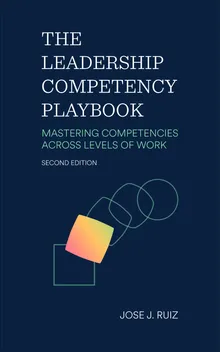
This competency has its own chapter in the second edition.

The Leadership Competency Playbook — Second Edition

Second Edition — available now

Read the second edition

Twenty-four competencies, read through the DOES cycle and the Levels of Work. The full architecture, chapter by chapter.

Available in paperback and Kindle.